Window Tint · · 4 min read
35% or 20% tint: which is darker, and which to pick
20% is darker than 35%, but the right shade depends on the window. How the numbers work, and which shade suits which goal.
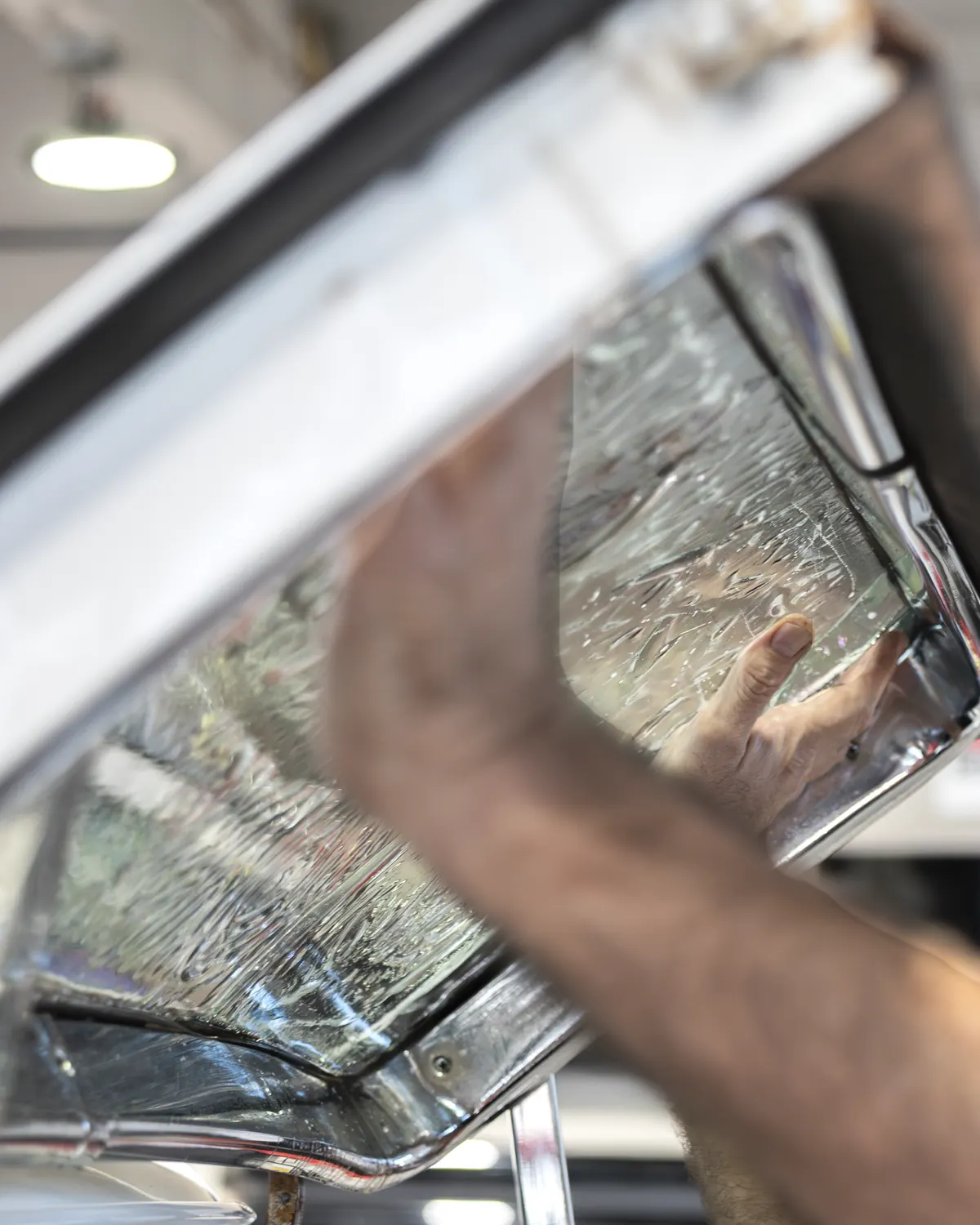
20% is darker than 35%. The number on a tint is the share of visible light that gets through the glass, so a lower number means darker glass: 35% lets in about a third of the light, 20% about a fifth. Which one to pick depends on the window, because California only allows the darker shades behind the driver.
What the number means
Tint shades are measured as visible light transmission, often shortened to VLT. It is the percentage of visible light that passes through. A 70% film lets most of the light in and looks almost clear. A 5% film lets in very little and, from outside, reads close to black.
Two things follow from that. First, the scale runs backwards from what people expect: the smaller the number, the darker the glass. Second, in California the number only comes into play behind the driver. The front side windows take only clear film under California law; ask us what is allowed before any film is cut.
Our shades, from light to dark
We fit five shades: 70%, 50%, 40%, 20% and 5%. You will see 35% and 15% mentioned a lot online, so here is where they fall against ours.
| Shade | How it looks | Where it can go in California |
|---|---|---|
| 70% | Very light | Rear windows where a light look is wanted; the front sides take clear film only (see the law post) |
| 50% | Half the light through | Rear side windows and rear window |
| 40% | The popular balance | Rear side windows and rear window |
| 35% (not in our guide) | Between our 40% and 20% | Rear side windows and rear window |
| 20% | Privacy | Rear side windows and rear window |
| 15% (not in our guide) | Between our 20% and 5% | Rear side windows and rear window |
| 5% | Maximum privacy | Rear side windows and rear window |
The rear windows can take any darkness as long as the car has outside mirrors on both sides. The front side windows take only clear film under California law. For the detail, read our post on California tint law, window by window.
35% or 20%: the difference you notice
In daylight, 35% tones the glass down and takes the edge off glare, but people outside can usually still make out the cabin. 20% makes the cabin hard to see into from the street, which is why it is the shade we call privacy.
At night the trade runs the other way. Darker glass lets in less light from street lamps and headlights, so a look over your shoulder or a reverse into a tight space takes a little more care at 20% than at 35%. That is the heart of the choice: privacy by day against a clearer view out at night.
Heat is a separate question. Darkness is about visible light, and the warmth you feel through the glass is mostly infrared. Ceramic films are made to stop more of that infrared at the glass. So going darker is not the only way to a cooler cabin, and a light shade is not a weak one. If heat is your main reason for tint, ask about the film line before you pick the number.
Which shade to pick
Start with the law, then your goal.
- Front side windows: the law sets these. They take only clear film under California law, so neither 35% nor 20% is legal there; ask us what is allowed before any film is cut.
- Rear windows, everyday balance: 40% cuts glare and adds some privacy without darkening the view much. It is the shade most people land on.
- Rear windows, privacy: 20% keeps passengers, bags and car seats out of sight.
- Rear windows, maximum privacy: 5% is the darkest we fit.
If you were set on 35%, our 40% is the nearest step lighter and our 20% the nearest step darker. If you wanted 35% for a little privacy without a dark rear window at night, 40% does that. If privacy is the point, go to 20%.
Should I get 15 or 20% tint?
15% is darker than 20%, but not by much. Both are rear-window shades in California. Our guide steps from 20% straight to 5%, so if 20% does not feel dark enough, the next step with us is 5%, maximum privacy.
If you are torn, think about where you drive after dark. On unlit roads and in tight parking, 20% is the easier shade to live with. If the car mostly sits in the sun and carries passengers who want shade and privacy, 5% on the rear is worth a look.
Pick the shade, then the film
Shade and film are two separate choices. The shade sets how dark the glass looks. The film line sets how much heat it keeps out, how clear it looks from inside, and whether it carries any metal. We fit six films from 3M and Autobahn, all color-stable, so the shade you choose will not fade to purple.
At the shop in Pasadena we go through the legal shade for each window before any film is cut, and you choose from there. A typical tint job takes two to four hours, depending on the car and the film. Quick Quote shows a starting estimate; staff confirm the final price. To compare the films and shades in one place, see our window tint page.
Before you
book
Is 35% or 20% tint darker?
20% is darker. The number is how much visible light gets through, so 20% lets in less light than 35% and the glass looks darker.
Should I get 15 or 20% tint?
15% is a little darker than 20%, and both belong on the rear windows in California. Our shade guide steps from 20% to 5%, so 20% is the easier shade to live with at night and 5% is the choice for maximum privacy.
Is a 35% tint legal in California?
Not on the front side windows, which take only clear film under California law. On the rear side windows and rear window any darkness is allowed when the car has outside mirrors on both sides.
Is 20% or 40% tint darker?
20% is darker. 40% is the popular balance between privacy and seeing out, and 20% is the privacy shade.
Does a darker tint keep the car cooler?
Darkness is about visible light, and heat is mostly about infrared. Ceramic films are made to stop more infrared at the glass, so the film line matters as much as the shade.
Read about window tint at VIP Auto Customs.
Pasadena, CA 91107
- Mon–Fri
- –
- Saturday
- –
- Sunday
- Closed